Hi everyone! I want to end my blog for the semester by providing calming techniques that help me to relax when I feel anxious. I stumbled upon a great article by Healthline that provides some other techniques as well.
Breathing
If you can, lie down with one hand on your
chest and one on your stomach. Feel your breathing and become aware of it. If
you are unable to lie down, just focus on that one task: breathing. Much of the
time when I start to have an oncoming panic attack, I realize that I am holding
my breath but that only worsens the situation.
Visualizing
We’ve all heard people say, “go to your
happy place.” Well, this is true. Close your eyes and visualize a place that
you feel safe and happy. When faced with stress, visualize this place and all its
details.
Muscle Tension
Just like with holding our breath, sometimes
we tense our muscles as a response to anxiety. To calm your muscles, sit and
begin by clenching your hands to make a fist. Release your fist slowly and feel
your muscles relaxing. You can continue this exercise with any muscle, but I
have found that tensing up calf muscles work great too.
One of the hardest things to do in an anxious situation is
to be aware enough to think of doing these exercises and then perform them. It
definitely takes practice and mental strength.
Find an exercise that works best of you. It may be a
combination of these or just one may do the trick! For additional exercises,
please refer to the article below.
Calm is an app that helps promote sleep and meditation. This
app includes guided meditations, sleep stories, breathing programs,
masterclasses, and relaxing music. When opening the app you are given options
of what you hope to get out of this app. Options include: calming anxiety,
lowering stress, happiness, self-esteem, gratitude, and so on. Calm is an easy
to navigate app that has many features. The sleep stories have especially been my
favorite because they are so calming and descriptive. I’ve never been a
meditation type person, but this app offers so many different options that one
is able to find something that they like. I could not find any weaknesses in
the app. It worked very smoothly and was user-friendly. One way to improve the
app would be for it to be free. This week I used the seven-day free trial that
was offered but if I wanted to continue, I would be charged $59.99 each year.
The app is great, but I do not feel that it is worth paying for. I feel that
using this app each day could be used for long term health behavior change for
some people. I believe that there are other ways to reduce stress that work
better for me. Therefore, if this app works for you, it can really impact your
life when used often.
Health/Fitness App #2: Mealime
The second app I decided to check out this week was a meal
planning app called Mealime. This app allows you to choose your meals for the
week and then it compiles a grocery list for you. This makes it easy to get
everything you need from the grocery store in one trip. When opening the app,
you select your diet (keto, low carb, vegan, vegetarian, etc.) and you can
select any ingredients you do not like to personalize the meals. The app then gives
you meal options for the week! The app is great because it lists all the
ingredients, cookware needed, and the cooking instructions. The one con to this
app would be that it does not give any nutritional information and that would
be the one thing I would like to change about this app. The app is free but if
you want more perks it costs $5.99 a month or $49.99 a year but you do receive
more recipes, the nutritional information, advanced recipe filters, and much
more. This is an app that I could see myself paying for because it is so
simple, and you have the meal choices, ingredients, recipe, and grocery list
all in one place. This app helps you create simple healthy dinners and,
therefore, could be responsible for a long-term behavior change. The app will
even remind you to choose your meals for the week each Sunday! I’m a big fan.
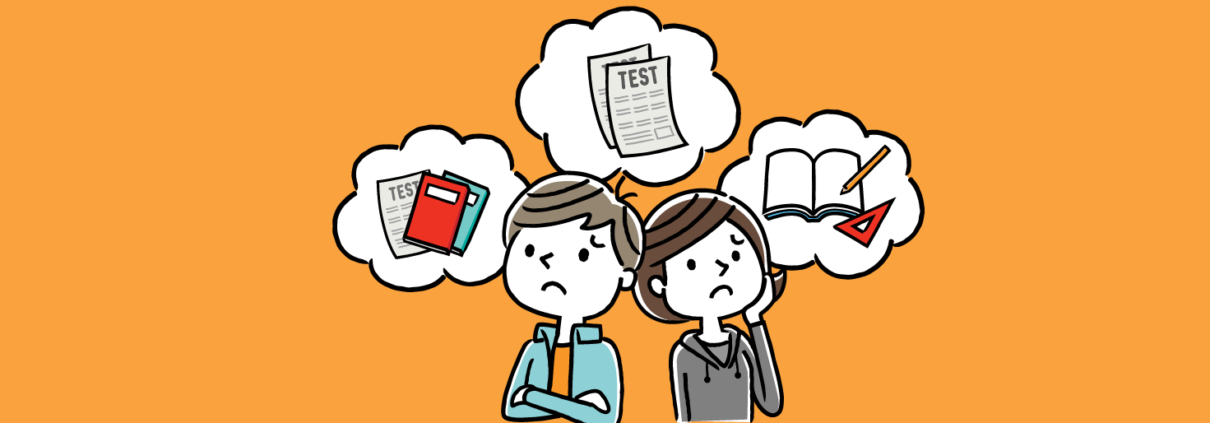
Let’s talk about test anxiety and all that goes along with it…
I’m sure we’ve all experienced anxiety and nervousness when going in to take a test. Some anxiety in this situation is normal and actually makes you prepare better for the test and, in the end, perform better. When anxiety while testing reaches an extent where the person is unable to concentrate and recall information they have studied it is considered “test anxiety”. When the student feels this anxiety becoming stronger during the test it causes them to have even more distress and to not perform well. This was me in college so I feel all you guys out there. From my personal experience, my test anxiety began to get severe the night before the test even though I knew I had been preparing for many days ahead. I would be unable to get a good night’s rest and would wake up early with the test on my mind. Going into the test I would always think about how bad it would be if I did not do well—when honestly nothing bad was really going to happen. When taking the test, I would have the basic symptoms of test anxiety: inability to concentrate and the inability to recall the information that I had studied. From here I would spiral and experience tremors and trouble breathing. This never happened in high school but the stress of undergrad and trying to get into a great graduate program made each test and quiz a monster to tackle.
Test anxiety can range from moderate to severe. Moderate symptoms include having trouble concentrating and having trouble recalling information. Many people can experience this level of test anxiety and still do well. On the other hand, severe test anxiety can lead to severe “physical, behavioral, cognitive, and emotional symptoms” such as trouble breathing, dizziness, diarrhea, and full on panic attacks.
For those of you who experience test anxiety, you may wonder where this all stems from. As many medical conditions go, it can be a combination of things. You could have failed a test in the past and you’re fearful that it might happen again, you ran out of time to study and so you feel unprepared, or maybe you’re just afraid of failure and are putting too much pressure on yourself. The good news is that this is treatable and so don’t suffer when there are tips and tricks to help overcome it. These include making sure you’re prepared, get rid of the negative thoughts, get enough sleep the night before, breath deeply and take it one question at a time, and, finally, realize that we’re not perfect and have peace in knowing you did your best. If these tips do not work well and you feel medication or counseling may be necessary, seek it out! Test anxiety is so common, especially among us millennials. Colleges are recognizing that this generation is comfortable talking about their anxiety so many resources are available if you chose to use them.
Okay, everyone. Take a deep breath together. We can do it!
After my last post, I feel it’s necessary to discuss treatment options for those who experience day-to-day anxiety with no relief. My last post was intended to make people aware that some anxiety is normal. If after examining yourself, you find it to become disruptive to your everyday life, you have options. I will go into more detail but the main treatment options include psychotherapy, medication, and other complementary health approaches.
Psychotherapy
There are oh to many psychotherapies to mention in one blog post but I will mention one of the most researched psychotherapies. Cognitive behavioral therapy (CBT) works to discover our beliefs and responses that cause spiralling, destructive thoughts. This is the attempt to slowly change our daily thought process when potentially stressful situations occur. Simply put, it is to replace negative thoughts with positive thinking.
Medication
Anti-anxiety or antidepressant medications may be an option when psychotherapy is not enough or to be used in combination with psychotherapy. Many people who experience anxiety have bouts of depression and, therefore, antidepressants work best for them. There is no one medication that works best because anxiety is such a complex disorder that affects each of us differently. Much of the time, trial and error will be used to determine which medication and dosage is best for the individual so be sure to keep your doctor informed of any side effects experienced.
Complementary Health Approaches
Complementary health approaches are non-traditional methods that may help reduce the symptoms of anxiety. It is important to note that these methods are not investigated or approved by the U.S Food and Drug Administration (FDA). Sometimes, these methods can be used in place of or in combination with medication and psychotherapies. These non-traditional health approaches include: vitamins, minerals, yoga, exercise, meditation, and equine therapy. Like always, it is important to check with your doctor before taking additional vitamins and minerals as they can sometimes be unnecessary or dangerous.
When our alarm clock goes off, it is unpleasant and we want it to stop but it is telling us something very important–get up. When a smoke detector goes off, we cover our ears because the sound is so loud and annoying, but we act. Why is it that we act upon all the alarms in our life but when we are experiencing anxiety we suppress it and move on with life? We don’t take out the smoke detector batteries and ignore the fire. We don’t hit the snooze button and ignore the important meeting at work (at least not all the time). We need to learn to become aware of what our body’s alarm is telling us about our health. Yes, there are medications that can help treat anxiety but are they a necessity or are they helping you ignore the anxiety?
Your anxiety alarm goes off to call you to action. This can either be saying you need to do more or do less. Here is what I mean by that, you may have a test coming up that is causing much stress. Your anxiety alarm sounds telling you to do more- study more. This is a positive call to action that benefits you by making you choose to study to calm the anxiety.
On the other hand, your anxiety may be telling you that you need to do less. Each person has their limit even though we do not want to admit it. This is also a positive call to action because your body is informing you that you are taking on too much responsibility and to chill out. When cutting back on responsibilities, this anxiety will be calmed.
Anxiety is unpleasant but it is meant to be. In the same way, a sore throat, a broken foot, and headaches are all unpleasant to tell you that something is wrong and to seek help. I write this not to deter each of you from the route of medication and further treatment, but to help you examine yourself and see if there is a lifestyle change that can impact you for the better.
Anxiety disorders are diagnosed when a person has prolonged worry, fear, and anxiety that interferes with their daily life. There are five different types of anxiety disorders which include post traumatic stress disorder (PTSD), obsessive-compulsive disorder (OCD), specific phobia (fear), generalized anxiety disorder, and panic disorder.
Generalized Anxiety Disorder
Generalized anxiety disorder is when a person is anxious much of the time and it interferes with day to day tasks. People of all ages can suffer from this condition and it is diagnosed by a healthcare provider using psychological questionnaires, family history, and a physical exam. It can be managed by medication, therapies, and learning techniques to cope with the anxiety can be helpful with generalized anxiety disorder.
Post-Traumatic Stress Disorder
PTSD can be experienced by those who were directly involved in a traumatic event, witnessed a traumatic event, repeated exposure to traumatic details, or hearing of a loved one experiencing a traumatic event. The diagnosis of PTSD is given when symptoms continue a month after the specific event. Like with all anxiety disorders, PTSD can be treated with medication or psychotherapies.
Obsessive Compulsive Disorder
Obsessive compulsive disorder is explained as repeated urges and thoughts that can cause anxiety. This person feels the need to fulfill these urges to suppress the anxiety and distress. These urges typically include the need to keep things in order, the fear of dirt or germs, aggressive thoughts, and other unwanted thoughts. People with OCD commonly create rules or routines to help manage their periods of obsessive thoughts. Treatment for OCD is most effective when both medication and psychotherapies are used.
Specific Phobia
A phobia is an intense fear of a situation or object. This fear is frequently irrational and is unable to be controlled by the person. These are also known as simple phobias and include heights, flying, spiders, snakes, blood, etc.
Panic Disorder
Those who suffer from panic disorder live in constant fear of having a panic attack. Panic attacks can come out of nowhere and last for several minutes. The idea that no trigger or a slight trigger can cause these panic attacks can cause these people to be fearful of doing activities and insecure enough to not seek treatment. This disorder is highly treatable, but the largest step is to seek help.
According to the ADAA, anxiety disorders are the most common type of mental illness by affecting 1 of 5 Americans. Our culture has transformed to where anxiety and depression is a much more spoken of topic. Because of this change, many people are seeking help. It is estimated that 40 million adults are affected but only 36.9% seek help for this treatable condition.
It has been said that millenials are the most anxiety ridden generation. Is this because expectations are getting higher and higher to get into great schools? Is it because there are expectations to workout everyday and have a perfect body? Have a job? Dress a certain way? Live up to one’s family’s expectations? On top of all of this, is there even time to sleep? I do believe that this generation is one of the most stressed out. We are the first generation to grow up in a culture consumed by social media and the internet. The internet makes us feel the need to move at hyperspeed to have a competitive edge in our career, social lives, schooling, and so on. The need to be the best or “fit in” can cause some pretty intense anxiety.
I, myself, am a full-time graduate student, working a full-time job, a newly married wife, a dog mom, all while striving to be accepted into my top choice for pharmacy school. It’s very easy to let loved ones slip away and to have a helpless feeling feeding the anxiety of letting people down and not being there for the ones you care about. While doing all this, living different lives in one, many people do not see the amount of stress we are under. Everyone experiences stress but there are periods in life of high stress and low stress. When in a period of high stress, I think about what I am working towards and that it will not be forever.
Finally, if you are reading this as a millenial, I just want to urge you to continue the conversation of mental health so that there is no longer a stigma surrounding it.
Let me end with this quote.
“You are not going to master the rest of your life in one day. Just relax. Master the day. Then just keep doing that every day.”
“I promise you nothing is as chaotic as it seems. Nothing is worth diminishing your health. Nothing is worth poisoning yourself into stress, anxiety, and fear.”
– Steve Maraboli


 Understanding Anxiety Disorders